Oh to be a Painter!
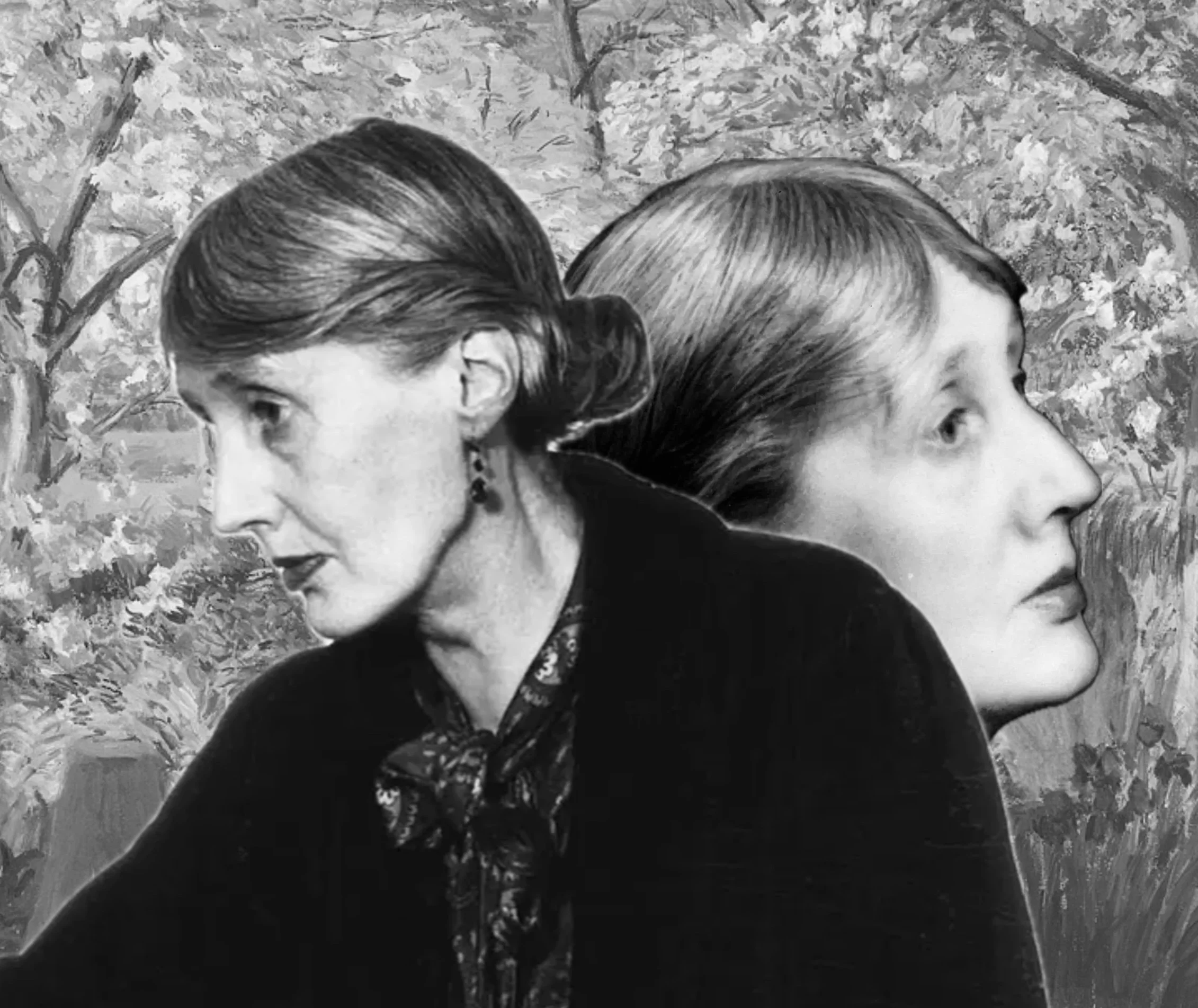
In our modern times, there seems to be a rush in art museums and galleries which are often filled with crowds upon crowds, and yet the paintings which inhabit these spaces hang there, silently, quietly. There is perhaps a silent power that each painting holds, which has been carefully selected, placed and now hangs on its designated spot on the gallery wall. It sits there for us to look at and to feel all that we want to feel, to observe every brush stroke that has been carefully placed on the canvas and which still now, hundreds of years later, sits on the surface as it did when the painter, brush in hand, placed it there. And perhaps it is difficult, impossible even, to absorb all that a painting has to say and depending on the pair of eyes that observe it, a painting might have many different things to say all together. Virginia Woolf herself once described painting as as “the silent art.” She observed how many of her fellow writers perceived paintings as “too still, too silent”, and how in return, “the silent painters” seemed to “make fools of us (the writers) as often as they choose.”
It is in her collection of essays Oh, to Be a Painter!, written during the 1920s and 1930s, where she examines the ongoing relationship between the verbal and the visual arts even further. She explains how many writers of the past have often been critical of painting, that they are in fact “of all critics of painting, the worst - the most prejudiced, the most distorted in their judgements.” She also explains however, that this sentiment seemed to change and that she herself, as one of the most prevalent writers of her time, seemed to realise more and more how writers too “use their eyes” and how painting and writing both inform the other, however ambivalent and ambiguous their relationship might be. To ask the question of what it means for a painter to paint and for a writer to write, perhaps is more so a question of what it means for the artist to live and to exist, as living and creating often go hand in hand.
To be a painter means to speak without words. This is perhaps where the beauty, mystery and wonder of paintings lie, because they somehow can at once be silent and yet hold so much within them. Occasionally we might be drawn to a painting or a painter without knowing why. When visiting galleries, a specific painting might be speaking to us directly and as we look at it, observe it, we speak back at it, not in words but with our eyes. We might find ourselves at a loss for words even, as a work of art is meant to be felt, and we therefore might find ourselves in search for them, for “words in us where we had not thought words to exist” and in search for “forms where we had never seen anything but thin air. As we gaze, words begin to raise their feeble limbs in the pale border-land of no man’s language, to sink down again in despair ; (…) they fade and disappear.”
Perhaps we paint because of all that we have to say, because of all that we have inside of us with no where to put it. We put onto the paper or the canvas a feeling, of being in the here and now, of existing simply, quietly and powerfully in this very moment in time. We arrange things as we choose them and communicate in silence through a language of colour and form, we show life “in its essence”, as we see it, feel it and inhabit it. So instead of saying, look at this flower, how beautiful she sits there all quietly by herself, instead of saying the words which will disappear in an instant, we take our pencil or our paints and sit with her, observe her, and give birth to our own little flower. We have decided to capture her, the very state of her on this very Sunday in March as the sun was shining and the birds were singing again. As Sheila Heti so wonderfully put it: “Art is not essential, but love is essential, and maybe that is why people make art, to express their love of something - that tree, humans, the world, language, intensity of thought - and the person who doesn’t respond to a work of art is perhaps missing the love of the thing that the artist is painting to, lovingly.” And how lucky we are to witness just that.
To be a painter means to choose amongst the chaos, to select the shapes and colours we see in front of us, and this to me is where the true beauty lies. And one might ask oneself what it means to be a painter in strange times like these, what it means to sit in front of the canvas with our brushes in hand whilst simultaneously the world seems to fall apart. When we put aside the noise, it all comes back to the fact that, quite simply, we create because there is this inexplicable need inside of us to do so, because we cannot help it but to paint, because we need to, for our own sake and for our sanity. To paint and to write and to create is to make sense of the world and of oneself, to find meaning in all the little things that other people might not even notice or look at, but we see it and choose to sit with it, to capture it and to hold it deep inside of us, to take the time and make the space for it. This of course, is an immense privilege and something I try to remind myself to never take for granted. Some might argue that having an eye for beauty and seeing beauty in the ordinary is a choice, but for me is it a way of being, it is something that has always been there and that only needs to be awakened, and the more you train your eyes, the more you will see. And writers as well “use their eyes” when creating, they always have.
To be a painter means as well to question yourself, to be in an ongoing critical conversation with yourself and the artwork that you want to make. Will St. John, a contemporary painter I greatly admire, recently spoke in an interview on why he creates and why he keeps creating: “I really believe in my vision as an artist, and in my work,” he said. “I think about that a lot recently, how strangely irrational or insane that is, especially when you’re starting out and maybe your work isn’t even very good yet. I think you have to have that kind of resolve, that no matter what happens you’re worth investing in. All artists who ultimately make it have this kind of unwavering belief in themselves and their work. I think that’s key.” As much as these words are a reminder to always keep on going, to keep on searching and discovering in the hopes of finding something and making something that holds a certain truth and seems worthwhile, it also a confirmation that we as artists have this burning fire inside of us which carries us through the good and the bad times, which keeps us moving and ever developing. For as long as I can remember it has always been like this for me. In my head I have always had one voice telling me that everything I produce and make looks horribly wrong, that by now I should be a better painter and writer and artist all around, that I should have accomplished so much more, that I do not have the skills to make all the paintings that I want to make and that all the ideas I have are rotting away in my brain with no place to go. The other voice however tells me that I am in fact very capable, that I can achieve all that I want to achieve, if I keep moving and observing and learning, there will be a time and place for everything, even though it might not always seem like it. My life as an artist appears to be an ongoing battle between self confidence and self doubt, of having next to no self belief that I am worthy of being a painter or an artists whilst also believing that I am and that I can be very capable. It is perhaps torturous to live like this, to always swing back and forth between extremes, and it might not be like this for everyone, nor is it healthy to be in such a state of mind, but I don’t know any other way. I tell myself that all the highs and lows are ultimately part of the creative process, because we as artists live for our art and we learn to live with it, because we choose to paint, we choose to write and to daydream and to hope, despite it all, for all there is to see, and all there is to say.
Sources:
Oh, to Be a Painter!, Virginia Woolf. Published by David Zwirner Books (2021), New York.
Alphabetical Diaries, Sheila Heti. Published by Fitzcarraldo Editions (2024), London.
Interview with Will St. John https://www.prestigeonline.com/hk/lifestyle/art-plus-design/top-cat-painter-will-st-johns-art-world-ascent/
For more of my writing, please click the following link: